ราชวงศ์
Ratchawong
ภาพรวม
Overview
ถนนตัวอย่าง เขตตัวอย่าง กรุงเทพฯ
Roadname Road, Districtname District, Bangkok
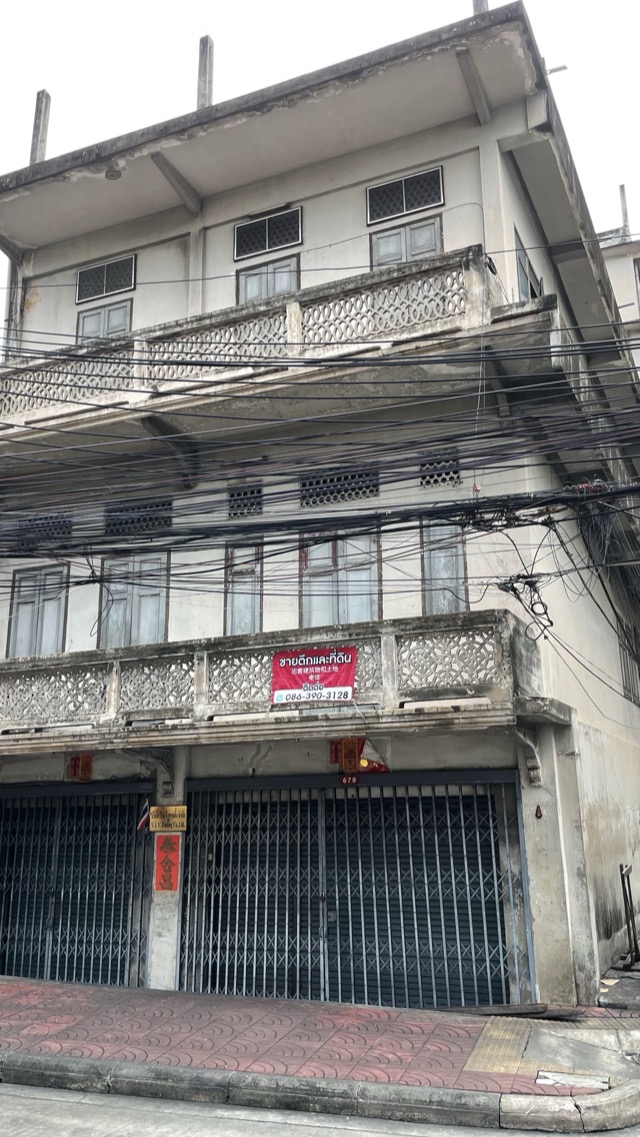
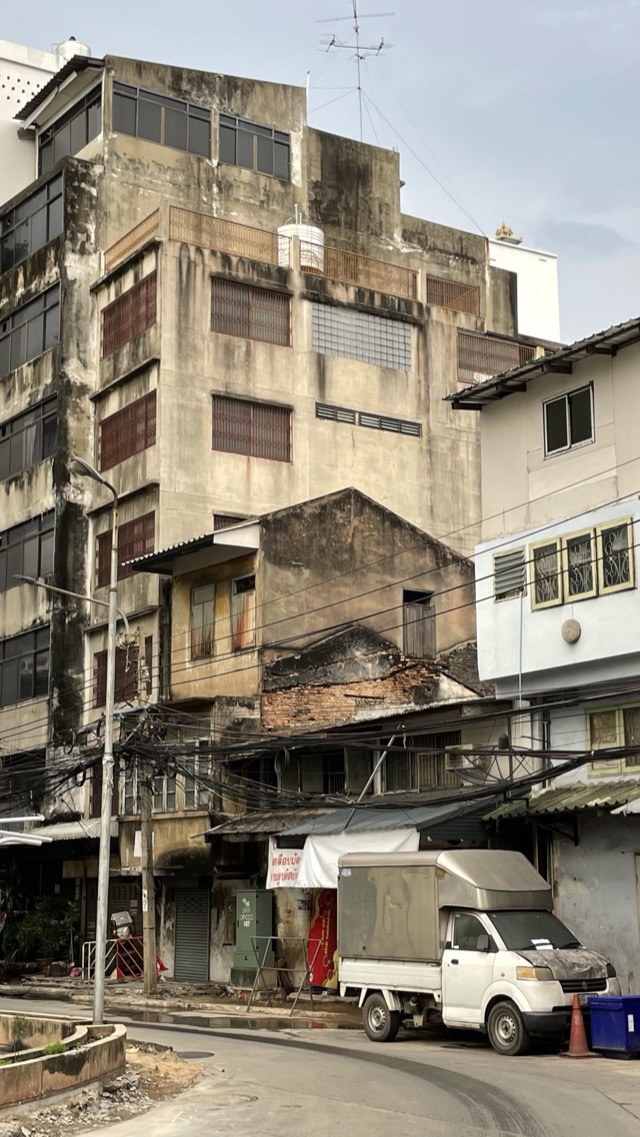
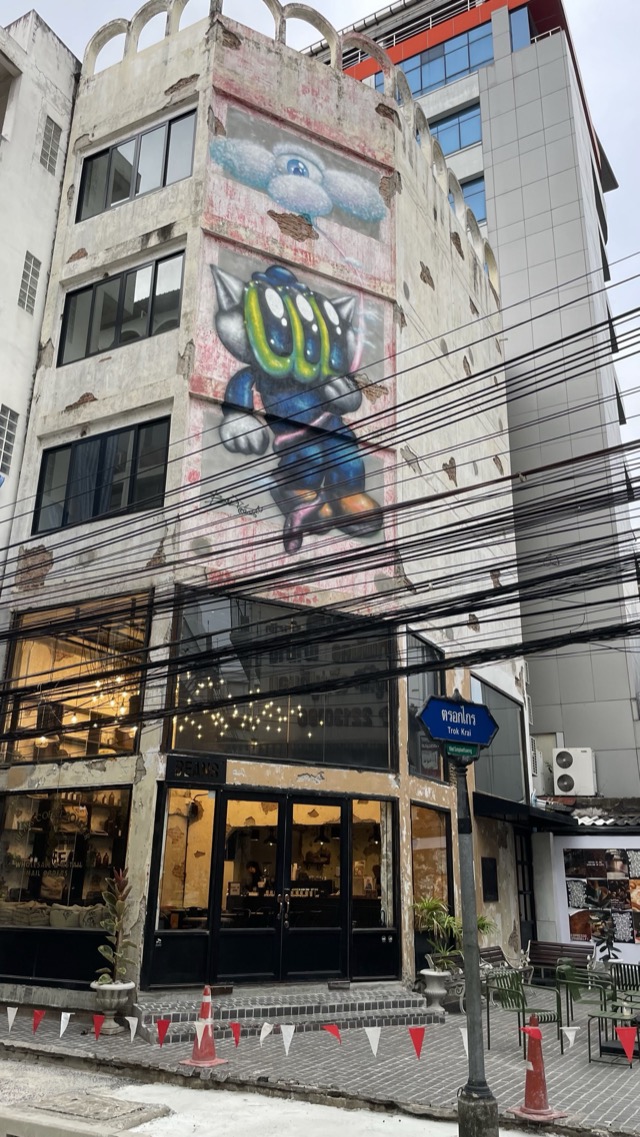
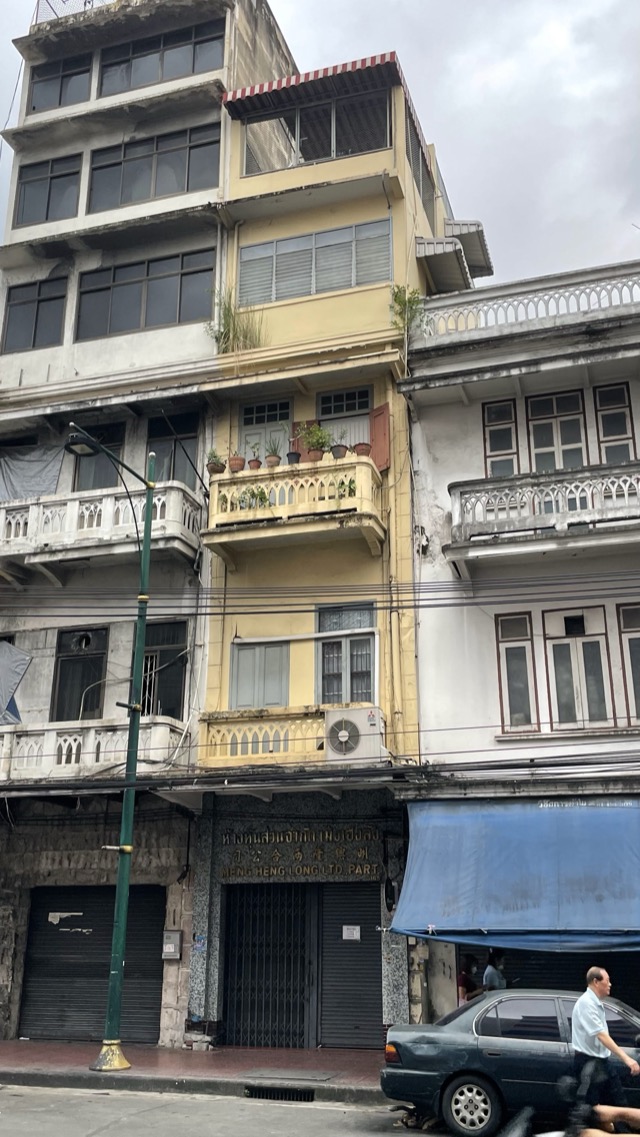
ตึกแถวจากย่านราชวงศ์ กรุงเทพฯ
Shophouses from the Ratchawong area of Bangkok.
ราชวงศ์เป็นส่วนหนึ่งของย่านเยาวราชอันเก่าแก่ของกรุงเทพฯ ซึ่งขึ้นชื่อเรื่องความหนาแน่นของสถาปัตยกรรมตึกแถวโบราณ อาคารที่บันทึกไว้ในชุดนี้มีสภาพหลากหลาย ตั้งแต่ด้านหน้าที่ได้รับการดูแลอย่างดีไปจนถึงอาคารที่ทรุดโทรมตามกาลเวลา ชั้นล่างส่วนใหญ่ยังคงใช้เพื่อการค้าขาย ขณะที่ชั้นบนมักคงผังการอยู่อาศัยแบบดั้งเดิมไว้ ยังต้องมีรายละเอียดเพิ่มเติมเกี่ยวกับอาคารแต่ละหลัง
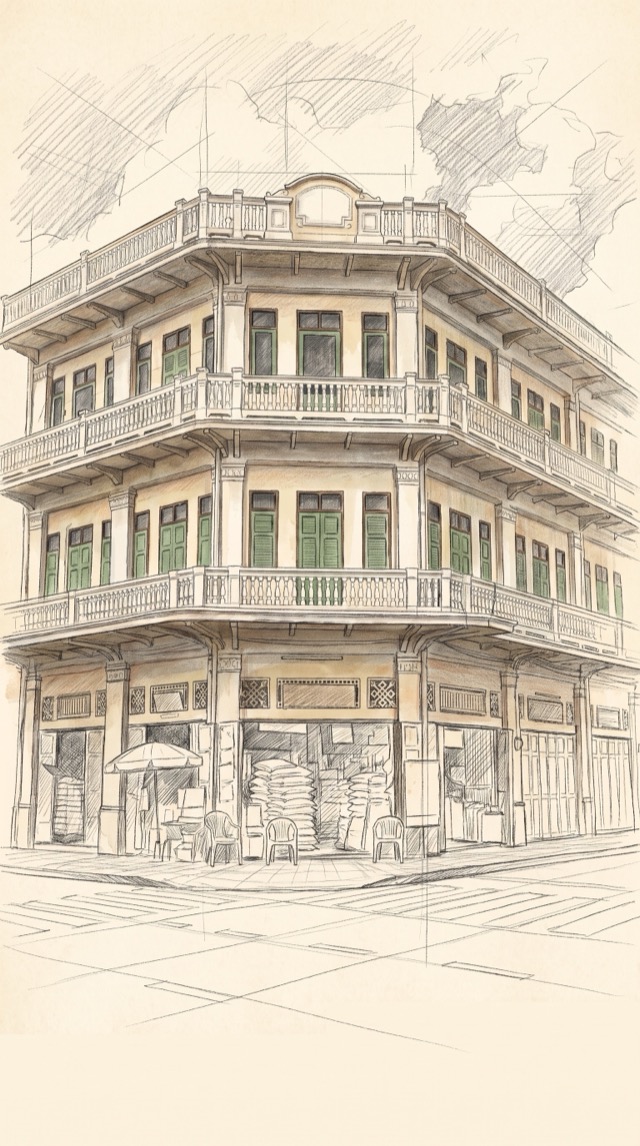
ตึกแถวหลายหลังในย่านนี้มีลวดลายไม้ฉลุและเหล็กดัดที่ระเบียงคล้ายกัน ซึ่งเป็นที่นิยมในช่วงต้นศตวรรษที่ 20 ภาพร่างด้านข้างแสดงรายละเอียดของระเบียงหนึ่งแห่ง โดยตัดสายไฟและป้ายต่างๆ ที่มักปรากฏในภาพถ่ายจริงออกไป
ลวดลายเหล่านี้มีความแตกต่างกันเล็กน้อยตลอดแนวถนน ซึ่งบ่งชี้ว่าอาคารเหล่านี้อาจสร้างขึ้นเป็นช่วงๆ ไม่ใช่พร้อมกันทั้งหมด อาคารบางหลังยังคงบานเกล็ดไม้ดั้งเดิมไว้ ขณะที่บางหลังเปลี่ยนเป็นบานเกล็ดอะลูมิเนียมหรือปิดทึบไปแล้ว ชั้นล่างส่วนใหญ่ได้รับการปรับปรุงมากกว่าชั้นบน ซึ่งเป็นเรื่องปกติของตึกแถวที่ยังใช้งานเชิงพาณิชย์อยู่
การบันทึกรายละเอียดระดับนี้เป็นเหตุผลหนึ่งที่ต้องกลับมาถ่ายภาพย่านราชวงศ์ใหม่ด้วยกล้องที่มีความละเอียดสูงขึ้น เนื่องจากลวดลายฉลุมีความละเอียดอ่อนที่เห็นชัดขึ้นมากเมื่อดูภาพขนาดเต็ม ยังต้องมีการค้นคว้าเพิ่มเติมเกี่ยวกับช่วงเวลาก่อสร้างและสถานะมรดกทางวัฒนธรรมของอาคารแต่ละหลังในย่านนี้
Ratchawong is part of Bangkok’s historic Chinatown district, known for its dense concentration of older shophouse architecture. The buildings captured here show a range of conditions, from well-preserved facades to others showing significant wear. Ground floors are typically in active commercial use, while upper floors often retain older residential layouts. Further detail on individual buildings is still to be confirmed.
Many of the shophouses along this row share a distinctive style of timber balcony and cast-iron fretwork, decorative trim applied beneath the eaves and along balcony rails that was popular during the early twentieth century. The sketch alongside shows one such balcony in detail, isolating the decorative pattern from the wiring and signage that usually competes for attention in a straight photograph.
This kind of ornamentation appears in slightly different variations up and down the street, suggesting the buildings were constructed in waves rather than as a single uniform development. Some balconies retain their original timber slats and shutters, while others have been replaced with aluminium louvres or simply boarded over. Ground-floor shopfronts have generally been modernised more aggressively than the floors above, which is typical of shophouse rows still in active commercial use.
Documenting this level of detail is part of the reason for revisiting Ratchawong with a proper camera rather than a phone, since the fretwork patterns are fine enough that a higher-resolution capture makes a real difference when the images are viewed at full size. Further research into the specific construction period and any listed heritage status for individual buildings in this row is still pending.