บ้านร้อยปีเทียนสือ
Thein Suek House
ภาพรวม
Overview
ตำบล เขานิเวศน์ อำเภอเมืองระนอง
Khao Niwet, Mueang Ranong
บ้านพ่อค้าจีน-ไทยสร้างปี พ.ศ. 2433 ในย่านเขานิเวศน์ จังหวัดระนอง สร้างโดยตระกูลที่เกี่ยวดองทางการแต่งงานกับตระกูล ณ ระนอง ผู้ก่อตั้งเมืองระนอง
An 1890 Sino-Thai merchant house in Ranong's Khao Niwet area, built by a family connected by marriage to the Khaw dynasty that founded the town.
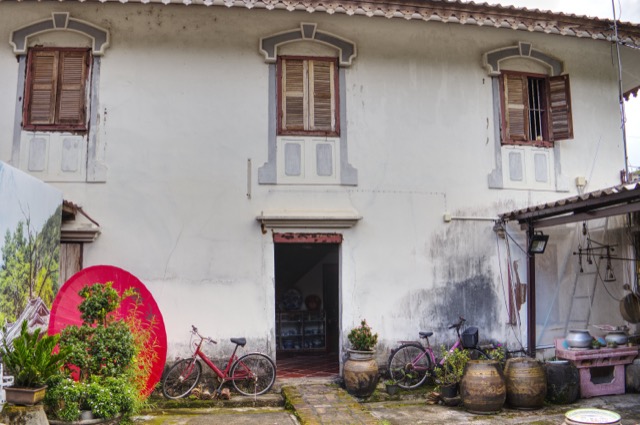
บ้านเทียนสือสร้างขึ้นเมื่อปี พ.ศ. 2433 ในสมัยรัชกาลที่ 5 ตามรูปแบบบ้านพ่อค้าสองชั้นที่พบทั่วไปในยุคทำเหมืองแร่ดีบุกของระนอง คือชั้นล่างก่ออิฐถือปูน ชั้นบนเป็นโครงไม้ พร้อมขอบหน้าต่างโค้งและบานเกล็ดไม้หนาที่ชั้นบน
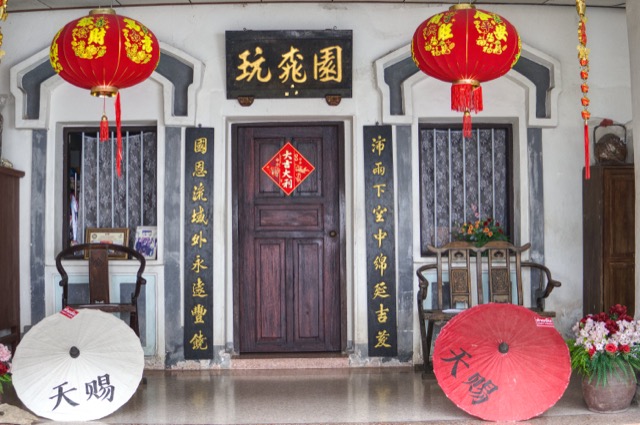
ป้ายแกะสลักปิดทองและคู่กลอนอักษรจีนแนวตั้งที่ทางเข้าเป็นองค์ประกอบดั้งเดิม ไม่ใช่สิ่งที่ติดตั้งเพิ่มภายหลัง ป้ายกลอนคู่และโคมไฟลักษณะนี้เป็นองค์ประกอบมาตรฐานของบ้านพ่อค้าจีน-ไทยที่สร้างขึ้นในยุคนั้น
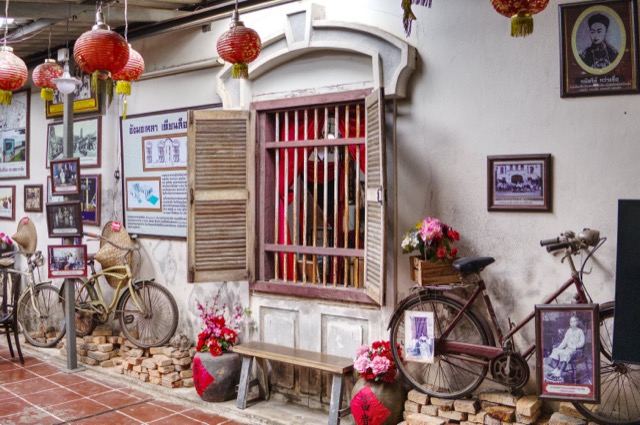
ปัจจุบันชั้นล่างของบ้านบริหารจัดการโดยทายาทของตระกูล เปิดเป็นแหล่งเรียนรู้ทางวัฒนธรรมขนาดเล็กแบบไม่เสียค่าเข้าชม ทางเดินบริเวณทางเข้าประดับด้วยภาพถ่ายเก่าของครอบครัวและข้าวของเครื่องใช้จากยุคที่ครอบครัวทำธุรกิจค้าแร่ดีบุก
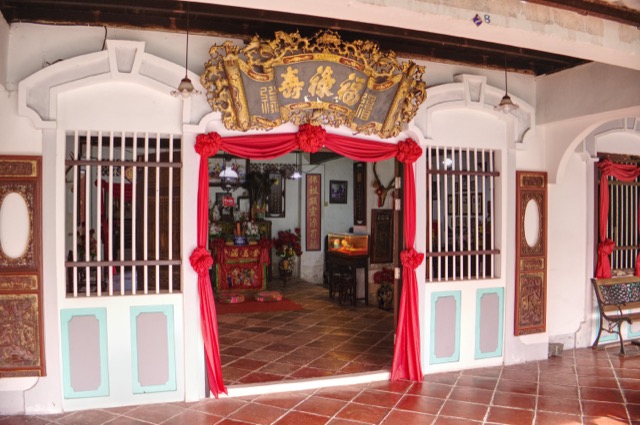
ป้ายแกะสลักปิดทองเหนือประตูทางเข้าหลักเขียนว่า ฮก ลก ซิ่ว (福祿壽) หมายถึงโชคลาภ ความเจริญรุ่งเรือง และอายุยืน ซึ่งเป็นคำอวยพรมาตรฐานของบ้านครอบครัวชาวจีน ติดตั้งอยู่เหนือศาลบูชาบรรพบุรุษที่ยังใช้งานอยู่จริงจนถึงปัจจุบัน
Built in 1890, during the reign of King Rama V, Thein Suek House follows the two-storey merchant-house form common to Ranong’s tin-trading era: a masonry ground floor beneath a timber upper storey, with arched window surrounds and heavy timber shutters at the upper level.
The gilt-carved plaque and vertical calligraphic couplets at the entrance are original fittings, not a later addition — paired verse boards and lanterns like these were standard on Chinese-Thai merchant houses built in this period.
The ground floor is now run by a descendant of the family as a small, free-entry heritage museum, its corridor lined with old family photographs and household items from the house’s tin-trading years.
The carved gilt sign over the main entrance reads fu lu shou (福祿壽) — good fortune, prosperity, and longevity — a standard blessing motif for a Chinese family home, set above a working ancestral shrine still in use today.